
Fethiye’s history goes back to the 4th century BC. The most striking ancient work is the temple rock tomb of Amyntas, son of Hermapias. Telmessos Theatre is Hellenistic. In the Lycian period the name Telmessos meant “bright land”; in the Middle Ages it was also called Megri, “far country”. Rock tombs and sarcophagi are common. From 1284 it was under the Mentese beylik; from 1424 it was Ottoman.
In eastern Mugla, with Denizli and Burdur to the north, the Mediterranean to the west, Antalya to the east and Dalaman to the northwest. About 40 km from Mugla centre and easy to reach.
Oludeniz, Saklikent, Tlos, Karagedik, Zincirli Kavak, Patlangic, Taskaya and Catalarik are all reachable in different ways. Knight Island and Calis Island fill up in summer.
Green and every shade of blue, with many beaches:
Gemile, about 9 km from Fethiye, is a natural protected area — an open-air museum as well as a beach. For a stay, see Fethiye rental villas.
Katrancı Cove, about 17 km away, is pine-lined and quieter.
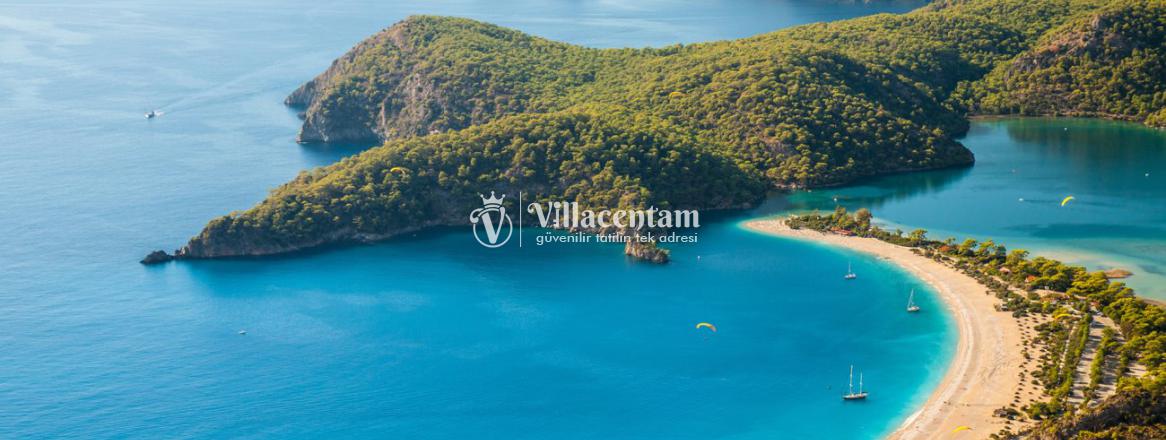
Oludeniz, about 9 km from Fethiye, was named the world’s most beautiful beach in 2006: calm water and a peaceful shore.
Oyuktepe’s coves are only 4 km from town (Akvaryum, Turun Pinari, Kuleli Boncuk, Aksazlar, Buyuk and Kucuk Samanlik).
Kabak Cove, 31 km away and close to Butterfly Valley, is for a quiet, nature-first stay.
Routes are many. Highlights include:
Amyntas King Tombs
Fethiye hosts local and foreign visitors every year; its name has travelled far.